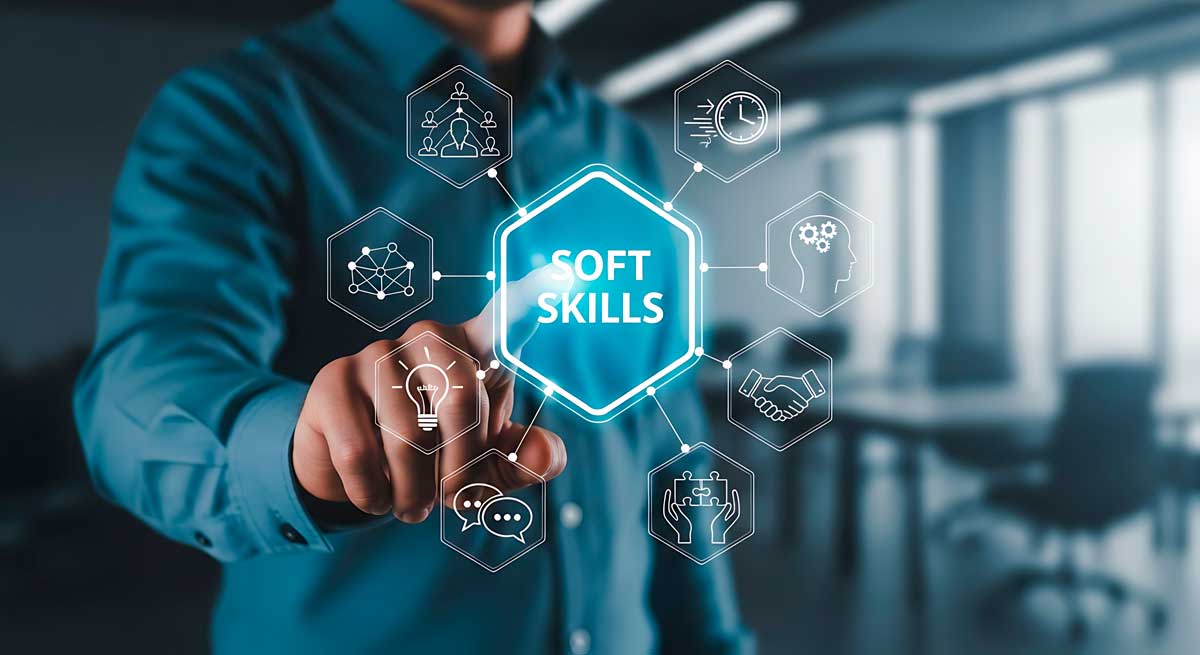
Soft skills are no longer viewed merely as a complement or added value to hard skills. With rapid technological advancements, especially in AI, critical thinking and creativity have become highly sought-after competencies by companies.
Soft skills have a direct impact on how teams collaborate, adapt to changes, and align their work with business objectives. They are essential for creating agile, cohesive environments prepared to tackle complex challenges. Integrating them into your talent strategy is not a secondary option; it is a key lever.
Strategies for Soft Skills Development in the Workplace
Developing soft skills requires more than just one-off training. It necessitates a structured strategy aligned with the team's real needs. Here are several effective steps to move in the right direction:
1. Skill Mapping and Assessment.
Before designing any plan, it is essential to understand the team's starting point. Specifically, identifying which soft skills are already present, which need reinforcing, and how they vary across roles or teams allows for a focused plan. Remember: sometimes, the team possesses skills you haven't yet identified.
How do you do this? The logical order is to map skills to obtain a real snapshot of the skills critical to your business. Afterward, it is key to evaluate team talent in order to thoroughly understand the abilities your employees currently possess. This is the best starting point for developing soft skills.
2. Personalized Learning Plans.
Soft skills development works best when adapted to each profile. Creating training paths within upskilling or reskilling strategies allows each individual to work on their areas for improvement without disconnecting from organizational goals.
3. A culture of feedback and spaces for mentoring
Developing soft skills needs to go a step further to be truly effective. This process requires reflection, practice, and guidance. Implementing feedback mechanisms between peers and leaders helps identify areas for improvement and promotes motivation. Additionally, there is the option to activate internal mentoring programs which help develop skills like empathy or emotional intelligence.
4. Leadership and Cross-functional Communication Programs
Middle management and profiles with cross-functional influence are key to activating soft skills throughout the organization. Training those who manage people or influence various departments has a multiplier effect that extends to entire teams and strengthens cross-departmental collaboration.
Do you want to activate the development of soft skills in your team with focus and real data? At The Wise Skill, we support you through every step of the process.
First, we map skills as a starting point.
We measure the actual talent within your team.
We establish training plans to close skills gaps.
We assist you in recruiting talent if that is what you need.
Request a demo of our tool and get an idea of how we work.