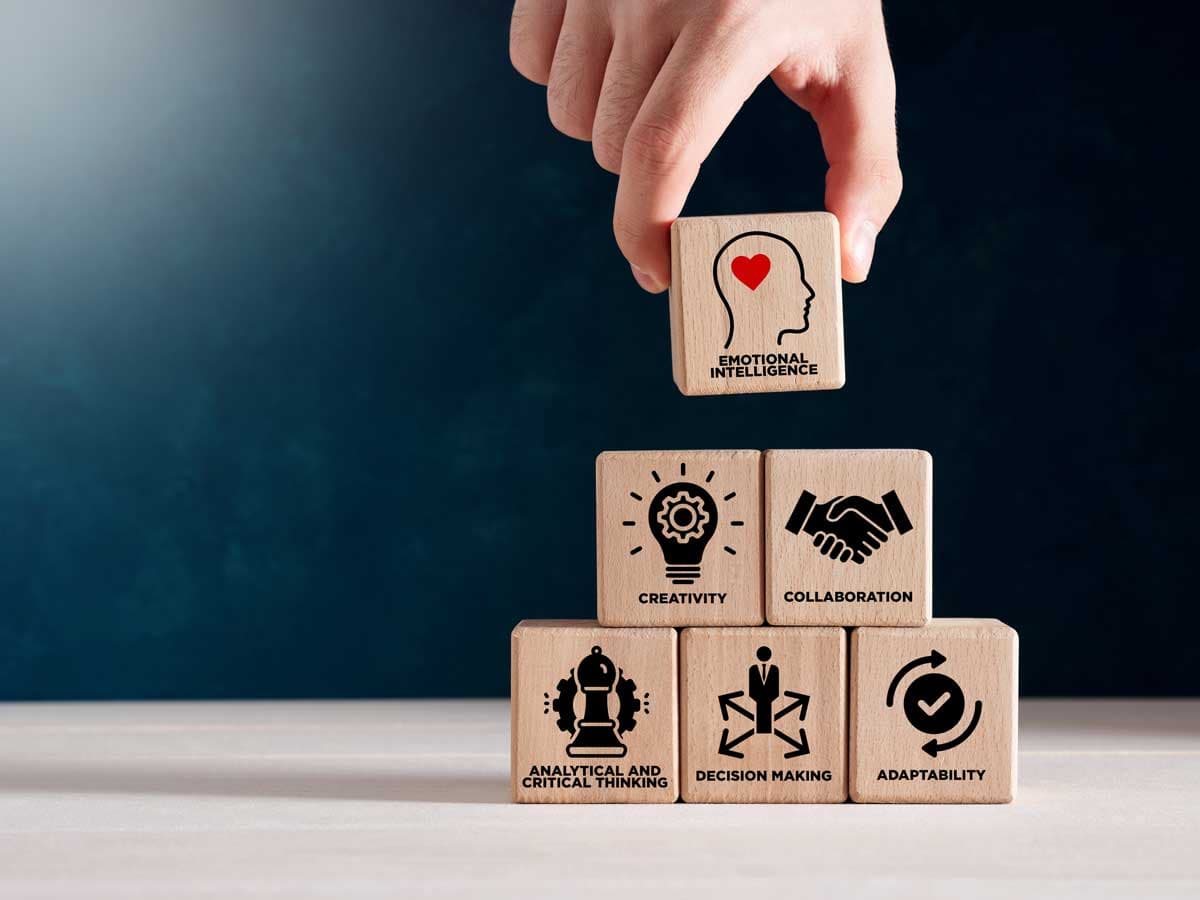
The true drivers of any business are not its goals or technology, but the people behind them. This requires acknowledging that workplace environments are shaped by emotions, interpersonal relationships, conflicts, and periods of change.
In this context, emotional intelligence skills are just as decisive as any technical competency.
5 emotional intelligence skills that teams must master
These are the emotional intelligence skills most in demand in professional environments involving client interaction, teamwork, or personnel management (such as HR departments):
Emotional self-awareness. We refer to the ability to identify our feelings and how they influence our decisions. This is key to avoiding impulsivity and managing stress. It is useful, for example, for understanding how we are affected by professional criticism or a tense meeting.
Self-regulation. Managing emotions is not about ignoring them; on the contrary, it is about feeling them and having the ability to regulate them. This is vitally important, especially during times of pressure, conflict, or uncertainty, to avoid disproportionate reactions.
Empathy. An essential skill in any work environment. It helps to connect with the team and put oneself in others' shoes to better understand different points of view. In general, it allows for improved communication, anticipating roadblocks, and building stronger professional relationships.
Social skills. Providing feedback, mediating conflicts, or aligning expectations are part of the emotional intelligence and communication skills that are most valued in any team.
Self-motivation. When things do not go as expected, self-motivation keeps us moving forward without losing focus or morale. Maintaining focus and energy is essential when facing workplace obstacles or performing unstimulating tasks.
Why is emotional intelligence such an important skill? How does it influence business leadership?
When these skills are present, it shows. Individuals manage stress better, resolve conflicts quickly, and work in healthier collaborative environments. As a result, staff turnover is reduced, internal cohesion is strengthened, and the capacity to adapt to change increases.
The lack of these skills often translates into tension, misunderstandings, and reactive decisions that affect collective performance.
But their impact is not limited to the operational level. leaders who possess emotional intelligence skills (emotional intelligence leadership skills) are capable of interpreting team dynamics, guiding without imposing, listening without judging, and maintaining motivation even in difficult moments. Some soft skills, such as active listening or effective communication, go hand in hand with emotional intelligence. Does your team possess these power skills? We can help you find out through our talent assessment process.